Showing posts with label Photography. Show all posts

Sunday, September 1, 2019

All In a Name?

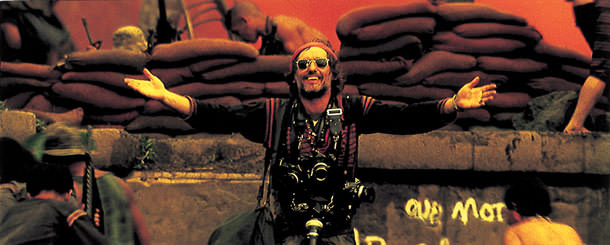
Dennis Hopper in "Apocalypse Now".


“Photographer”

The name elicits different visions within people's minds. It might be a sports photographer with a big, white lens on the sidelines of a sporting event. It might be a photojournalist in a war-torn city. It might be a fashion photographer working with expensive models. It may be closer to home for most people, such as a wedding or portrait photographer. In any case, there is an assumption the title applies to someone who is earning a living as a photographer.

“I'm a photographer”.

This phrase evokes similar thoughts. People naturally assume that someone uttering those words somehow falls into the category of a person who really knows what they are doing when it comes to using a camera and producing eye-catching photos. The reality is different, however.

Many people I encounter who call themselves photographers really do so not because they work as a professional, or even because they have a notable level of skill. It's because they have a hobby-photography-that they support with expensive and sophisticated equipment. One day they are going around capturing photos with a smartphone or inexpensive point and shoot, just like a lot of other people. The next day they become a photographer because they bought a DSLR or MILC with a couple of lenses.

When it comes to other hobbies/arts/crafts that involve equipment, photography is an odd phenomenon. Someone can buy a guitar and amplifier that costs just as much, if not considerably more, than a camera kit, but won't so readily call themselves a “Guitarist”. Perhaps that's because most people can easily tell whether a person qualifies as a “Guitarist” (someone with above average skill who possibly earns a living playing guitar). A person who owns a $10,000 Taylor guitar, but stumbles through the opening of “Stairway to Heaven” will quickly convince others they're just own a really nice guitar and know how to play it (sort of), but they are not a “Guitarist”.

Why is it then, that people so easily refer to themselves as photographers simply because they own good gear and take a lot of photographs?

I see several reasons.

One is that people who don't own expensive camera gear seem to assume that someone walking around with a big, full frame DSLR with a big lens and a camera bag must be, if not a professional, then someone with above average skill. Unfortunately expensive gear doesn't correlate to skill in photography (even though many people with expensive gear think that's the case). I regularly see photos on photography forums that could just as well have been taken with a smartphone-and are less engaging than many smartphone photos.

Another reason is that most cameras today make if pretty easy to create technically good images. Many of those images have characteristics which are difficult, or even impossible, to achieve with a smartphone or cheap point and shoot cameras. Examples are shallow depth of field/bokeh (though some smartphones can now simulate this through computational photography); frozen action through high shutter speeds; very wide angle or long telephoto images; and macro images. Low light photography is a situation in which smartphones and cheaper cameras continue to fall short of more expensive gear as well.

The result is something like this: Stephanie decides she wants to “get serious” about photography and buys a Sony A7Riii and a couple of zoom lenses, as well as a 50mm f1.8 prime “for the creamy bokeh”. She makes essentially the same types of photos she's been making with her iPhone-her cat, her kids, her garden-but now they have aspects that were lacking on her iPhone images such as higher resolution, shallower depth of field, and close in views thanks to the 70-200 zoom she bought.

All her friends are wowed by her photos because they look better than what they take with their phones and point and shoots, and tell Stephanie she should become a professional. That's when she started calling herself a photographer.

She convinces a coworker to let her shoot his upcoming wedding. After all, she's a photographer with “professional gear”. She's never shot a wedding before, but how hard can it be?

Hard enough that real professional wedding photographers have spent years honing their craft.

She decides to only charge her coworker $200 (as a favor). Since that's a tenth of what the established wedding photographers in town charge, he jumps at the offer. After all, Stephanie is a photographer with really nice photos taken with her really nice camera.

Stephanie shows up at the wedding with just her camera and lenses. Because that's the only gear she has. She wanders around the chapel, and then the reception hall, taking photos the same way she usually does, just sort of pointing her camera at what she likes and pressing the shutter. At the close of the reception she tells the bride and groom she has “a couple of hundred really good ones” and promises to send them a CD with all of the images in a couple of days.

The newlyweds return from their honeymoon to find the promised CD waiting with their mail. They eagerly open the envelope and pop the CD into their computer. The images that appear are vibrant, mostly, except for the underexposed ones. And that one they would have loved to make a print of is kind of blurry. Why are the heads cut off of so many close ups, and the legs cut off awkwardly on the group shots? There are no photos of the groom's parents, and the ones of the bride's parents are just of them sitting at the table during the reception. And what is with the ceremony photos being so yellow and dark looking...?

The couple now wishes they'd paid the $2000 for a real photographer, because Stephanie really isn't one.

This brings up the third reason why people so readily call themselves photographers just by virtue of the gear they own: lack of knowledge of what truly good photos look like. I'm not talking about the technical aspect. A monkey can literally take technically good photos with modern gear. I'm talking about having the knowledge of photography as a craft, and art, to both know how to capture photos under various conditions as well as make sure those photos are aesthetically pleasing and emotionally engaging.

In the minds of most people, the label “photographer” implies an ability to produce images that “non-photographers” seldom produce. The gear doesn't do this: it only enhances the ability of the photographer. I refer to people who know how to use expensive camera gear effectively, but produce images that aesthetically are no better than what they'd get with a smartphone “camera operators”. That's all they are really doing, just operating a camera.

Of course, many people will argue with me about this (and do) because they look at their high resolution, ultra-sharp, perfectly exposed photos of their cat with creamy bokeh and declare that such images prove they deserve the title “photographer”. I no longer try to argue with such people. It's not worth the agitation and besides: the expensive gear they buy helps camera companies stay in business and produce the sort of gear that “real photographers” use.

Sunday, January 14, 2018

The "Secret" to Better Photographs?


If left to the marketing people from various camera manufacturers, the key to making great photographs is to buy the latest cameras they have to offer. Sure, you may have done that a couple of years ago, but that camera no longer produces photos as good as its replacement. They even have lab test data and professional endorsements to back up that claim.

The situation isn't helped any by the thousands of “experts” on various photography websites who claim they must have certain camera features to produce the best photos they can. Certainly better high ISO performance can help produce clearer low light photos. There's no doubt that better auto focus speed and accuracy can help with sports or wildlife photos. The question is whether these make for better images.

By that I mean: does the image you are viewing strike a chord with you? Does it resonate in some way that evokes certain emotions or thoughts? Does it leave you thinking about what you viewed even after you have stopped viewing it?

These are important questions to ask yourself when considering what a “good” photograph is. Granted, for most situations, what people are really looking for is an in-focus, pleasantly-composed image that captures the moment for future viewing. The fact is that today, smartphones can do that for about 75% of situations. For those times when things like long lenses or high frame rate or high ISO performance are needed, even 5 year old dslrs and milcs can do more than most people really need.

A visit to any photography websites with public forums (such as dpreview.com) will demonstrate that many of the expert hobbiests and enthusiasts who take great pride in the quality of their bleeding edge gear are taking photos that could be done just as well with cameras 5 or even 10 years old. For that matter, when it comes down to showing on the internet or average sized prints, smartphones from the past couple of years have more than enough output.

There are a lot of average, even mediocre photos being taken with the latest, top quality camera gear. So why aren't these photos really good, or even great, given the cameras used are supposed to give that level of result?

Because the people using the cameras are looking to the wrong source of real “goodness” of their photos.

“It's not the camera, it's the photographer” is a common phrase, and fundamentally it is the great truth behind producing the best photos. Laying aside certain obvious technical limitations or requirements, it's the mind behind the making of an image that counts the most. This involves both the technical understanding of how cameras work in conjunction with light and shadow, color and form, but also the creative spark that drives a person to produce photos to begin with.

There's no secret to learning to produce good, or even great photos. Having suitable gear and learning to use it well is the easy part. The thousands of technically great, but aesthetically uninspiring photos out there prove this. What is often overlooked is inspiration. By that I mean having a sort of photographic muse, a reference point from which you assess your own efforts at achieving the best, most-satisfying photos you can.

That inspiration comes from other photographers (or even painters). Any photography instructor worth his/her salt will tell you to look at the work of as many notable photographers as you can. Study their images. Pick the ones you find most inspiring, those images that make you think “I wish I could take a photo like that” and find out how it was done. Pick a few favorite photographers and learn about them: their lives, their techniques, why they produced the sort of images they did.

I say this because in a recent discussion on photography, I cited two well known sports photographers. Someone replied that he had no idea who they were as though they must not be that good if he didn't know about them. Granted, he may simply not have enough of an interest in sports photography to know of any famous sports photographers, but his ignorance is only one of many examples.

This ignorance of past masters a problem I see a lot among photographers today. I see people talking about how they can't produce certain images because their gear doesn't focus fast enough, or doesn't have a high enough burst frame rate, or the high ISO performance isn't clean enough, etc. The fact is that in the past none of these technical limitations prevented photographers from producing classic, iconic images.

That's why I say the “secret” to producing the best photos is to study past masters. Immerse yourself in their images. Let the thoughts and emotions you experience looking at them dominate your thinking. Bask in the emotional, aesthetic aspect of the photos for a while. After you gain some understanding of what the photograph makes you think and feel and why it does, then start considering the technical aspects of the photo.

The average person relates to an image based on the emotional impact it has on them. Most people don't look at an image and immediately think about what lens was used or whether it's suitably sharp or how bad the high ISO noise level is. They judge a photo by an emotional response that occurs within about 3 seconds of viewing it. It's mostly the gear-oriented enthusiasts who first think in terms of technical qualities of a photo.

My own “first inspiration” came from W. Eugene Smith. Since then I've added many photographers to the list of those I study, but he was the first whose photos made me really stop and think about how, and why, I wanted to produce images similar to his.

I can guarantee that if you spend more time studying the photos of great photographers than you do visiting “how to” websites or forums populated by self-proclaimed experts, your photos will improve. This is because you have to know what great photos look like in order to try to accomplish the same thing. Here's a good website to get you started:


(Normally I would recommend the Masters of Photography website, but it appears that no one is maintaining it lately and so a lot of the images don't even load).


Sunday, September 17, 2017

They May Not Be Professional Photographers.


“Professional Photographer” is an amorphous term. To some, it means a person with an above-average ability to produce photos. You know, Cover of Vogue, 2 page spread in National Geographic, Antonio Brown leaping for a TD pass kind of pics. "Professional Photographers" are the ones who know how to consistently produce images that leave the average person in awe of the skill required to do so.

However, some people who already produce above-average photos-but don't make a living or even get paid for doing so-insist that a “professional photographer” be defined only as those who earn more than 50% of their income from photography. Some of these folks seem to insist on this definition as a way of making sure people realize that they produce “professional quality photos” but they just don't get paid enough to be called professional.

In my experience, most of this type of person use their preferred definition to put down others (“He's not really a professional, so he's no more an expert on photography than I am”). The result is that this income-based definition shows up a lot on photography forums as a method of trying to win arguments rather than be helpful when the subject requires it.

Myself? I learned not to poke the hornets' nest. I let those who insist on that definition have their way. I use “working photographer” to refer to people who are earning some sort of income from their photos, but not making a living from photography (such as myself).

The problem with talking about "professional photographers" is that the average person doesn't think in terms of income percentage when it comes to deeming someone a “professional photographer”. Most people are going to assume that if a person puts up a website and/or has a Craigslist ad, and charges for their work, they must be a “professional photographer”. Reality demonstrates that a number of people charging for their work may be making decent money at it, but don't really have the skills associated with being a “professional grade photographer”.

Think in terms of a local garage band versus a Grammy-winning group. The guys in a local band may be making ends meet from their gigs and CD sales, but that doesn't mean they are on the same level as U2. Most people understand that distinction when it comes to music, but not necessarily when it comes to photography.

I think that's because most people have an easier time telling great music apart from good music, but less so when it comes to photography. While an out of tune singer can literally cause people pain, the photographic equivalent (flawed composition or technique) in a photo often isn't noticed by the average viewer. Those flaws are, however, noticed by experienced photographers. That's what contributes to the arguments about what constitutes a “professional photographer”.

A person will represent himself on a forum as a “professional photographer”, all the while admitting he has only just recently “gotten serious” about photography. I've even seen posts such as “I just started in photography and want to know how much I should charge for a wedding?”. These are often from people who only recently upgraded from a smartphone or point and shoot camera by purchasing a entry level dslr and a couple of kit lenses. Sometimes they been able to buy “pro grade gear” such as a full frame dslr and a higher tier lens or two, but usually they are really out there trying to do “professional photography” when they really are still in the stage of learning the craft.

NOTE: I have nothing against beginners who buy gear with the goal of eventually becoming pros, as long as they realize there is a process that can take years to reach that point of competency, depending on the genre. Yes, there are people who pick up a camera and have a natural talent for photography. That's a rare situation, not a standard by which to decide to start charging people money for photos.

To me it's inordinately selfish to put at risk the memories of a once in a lifetime event because the person trying to be hired for the job lacks the skills and experience to do a truly “professional” job of it. I don't care if that person's friends all told him that he takes “really good” photos and “should be a professional”. That's like telling the guy who is good at scoring touchdowns in a community flag football league that he should turn pro. Yet that is essentially how some people decide to “go pro” as photographers.

My point, (and I do have one), is that not every “professional photographer” is truly a professional. The people hiring some of them are at risk for having weddings, portraits and events poorly documented as a result of the lack of experience, knowledge, and even equipment, on the part of the “professional photographer” they hired.

When I mention gear I'm not necessarily saying that a “pro” must have top of the line cameras and lenses (in fact having better quality lenses is often more important than the camera body). I'm talking about things such as strobes and/or lighting equipment, reflectors, stands for all these lighting items and numerous other accessories that contribute to those “wow” type photos that people see on the websites of the best photographers.

Sure, the best pros may “fix it in post (processing)” but that's only if there was a problem during the shoot. They know how to get everything right before they even capture the image.

Remember, my definition of “professional photographer” includes a level of skill and experience that helps ensure they are providing photos that really stand out compared to the efforts by non-professionals.

So, without further ado (and with apologies to Jeff Foxworthy) here is my “They may not be a professional photographer” list for your consideration:

  • If he offers to give you all the photos they take on a CD without editing or limiting the selection to the best photos, he may not be a professional photographer.
  • If she charges drastically less than other photographers for the same job, yet offers more photos, she may not be a professional photographer.
  • If he thinks a “keeper rate” of 10% is good, he may not be a professional photographer.
  • If she says he's a “natural light photographer” and really means that she doesn't know enough about strobes or reflectors to use them, she may not be a professional photographer.
  • If he takes over 100 photos during a simple portrait session, and lets the client sort through all of them to choose favorites, he may not be a professional photographer (hint, posing someone can take as much as 50% of the time during a session, so rapid-fire captures is not a good thing. A 15 to 20 solid photos from a 30 minute session is “standard”).
  • If she doesn't have clients sign a contract, she may not be a professional photographer.
  • If he has only been “doing photography” for a short time (like only a year or two) he may not be a professional photographer.
  • If she has prints done by any place other than a lab that offers professional grade services, she may not be a professional photographer.
  • If his website has a lot of photos from only a couple of jobs, rather than a variety of shoots and subjects, he may not be a professional photographer.

Anyone is free to charge for their photography. Anyone is free to pay people whatever they want to pay (or can afford) for photography. Some people simply can't afford $800 for senior portraits of $2000 for a wedding. I get that. However, photography is one of those “you get what you pay for” industries. Photographers who charge premium prices are producing results that warrant those prices. People who advertise on Craigslist at rock bottom prices would be charging the higher prices if their skills and results warranted it.

My point here is that if you can afford a $2000 photographer but decide to go with a $200 photographer to save money, you will not get the results you really want. On the other hand, if you can only afford $200, then be careful about who you hire.

On forums I frequent I am constantly seeing posts of photos by people wanting critique. A lot of people respond with “Oh, nice shot” or “great lighting”. Then there are those of us who will say things like “That pose is bad, her head should be tilted back a bit more” or “you cut their legs of right at the ankles: that's unnerving to viewers”, or “the lack of catch-lights make her look like she has shark eyes”. Even something elementary such as “her left eye is out of focus because you used to large an aperture”. These are all things that a truly professional-grade photographer knows about, looks for and addresses before even releasing the shutter.

I'm a teacher at heart, so I love offering feedback. What I don't love is finding out that some pretty mediocre photos are from a paid session, and someone is actually accepting money for photos that I would send to the trash bin. As a working photographer, I have a responsibility to give clients the very best.


If you're looking to hire a photographer, or some “professional photographer” is trying to offer you advice, consider some of what I've said here. I hope that if you do, it might avoid some headaches.

Saturday, May 21, 2016

An "Impossible" Photo

Willy Porter and Carmen Nickerson. Copyright 2016, Charles Black and Eye Guess Photography. Photo taken with Olympus
OMD EM1 and 50-200 f2.8-3.5 zoom. ISO 5000, 1/200 at f3.5, 200mm


This photo of Willy Porter and Carmen Nickerson is supposed to be "impossible". It was produced with a micro four thirds camera, the Olympus OMD EM1. According to some people the sensor in my camera is too small to use for concert photography. High ISO images, such as this one shot at ISO 5000, are just too noisy, too lacking in detail to be any good.

At least that's what some "experts" say. The thing is, many of these "experts" are the types who depend very heavily on their cameras to do things they should be using their own minds to do. That is, take the steps necessary to capture images in a way that allows for the final version to look the way they want it to look. What has happened is that some people become fixated on "OOC" images (out of camera) and eschew and criticize any images that they feel have had too much post processing done.

This is actually a pretty ridiculous attitude given that for the entire history of photography the greatest images have often involved extensive "post processing" of some sort. However, this article isn't about the whole "OOC vs PP" argument that continues to rage on various websites and at camera club meetings. It's about how to make sure your chosen photographic tool produces images that may seem "impossible". Whether that photographic tool is a smartphone, compact camera, or top of the line DSLR, the principles behind "impossible" images are the same.


  1. Get to know your equipment. Understand what it can do well and what its limitations are. Then understand that it's a stupid, inanimate object and you do the thinking. Study some books, articles or watch videos about photography, not just about gear. Learn basic principles such as exposure, dynamic range (the range of dark and bright areas that retain detail in the photo) and other things that your dumb camera can only adjust based on fixed, programmed parameters.
  2. Learn how photographs you admire were created. This will help you understand things such as lighting, composition, posing models, etc. You will find that in very few instances did the photographer depend on the camera by itself to make the image stand out. One thing that makes the best pros the best, and the Masters the Masters, is realizing that a camera is a tool that has to be used in the right way, not the decision maker in the creative process.
  3. Get a good editing program, and learn it in depth. I use Adobe Creative Cloud, which consists of Light Room and Adobe CC. I also have a collection of plug ins that do things the basic applications can't, or don't do as well. There are plenty of programs out there, many of them free. If you primarily use your smartphone for photography, I recommend Snapseed or Photoshop Elements for Android. They're free, and allow for a lot of adjustments. There are also some terrific apps specifically for iPhone.Then, learn the real editing part of the software, not just the cool looking effects. Those effects only go so far in making photos truly stand out. Some people call some of my images "amazing" and nearly all of those images have no special effects added: it's just a good combination of my experience and skill in photography in general, the camera and the software.
  4. Experiment. One great thing about digital is you can take thousands of images without it costing much to do so. This allows you to capture images of a huge variety of subjects under a wide range of conditions. Take lots of photos with different in camera settings. Then see how those settings related and interact with settings in the editor. 
  5. Develop a front to back workflow. The "OOC" folks tend to put almost all their attention on the moment of capture, and how the camera is set for that. They are selling themselves short, in my opinion. Photography has always been about a complete process to create the final image, not just how to set the camera appropriately for the moment of capture. That's where step 4 becomes so helpful: over time, you will find how in camera settings A will work with editor adjustments B to create a certain look to your images that set them apart from the "typical snapshot". What I mean is that know, before you even capture the image, how you want the final image to look, and how what you have the camera set for works with what you will do in post processing to achieve that look.
  6. Be your own harshest critic. Probably the area most people hinder themselves in improving their photography is they don't know how to effectively self-critique. What usually happens is emotional involvement with an image makes a person think it's a better photo than it really is. I regularly look at "great photos" people submit to forums and think "Holy Buckets of Cod, why did that person even keep that image?" I know the answer: it's a photo of a child, or pet, or pretty sunset, and they wanted to preserve the memory. That is really what photography is best for. However, it doesn't mean the photographs are good as photographs. It just means they are good as a preserved memory. Learnt to separate emotional assessment of the memory from critical assessment of the technical and aesthetic qualities of the image.
All of this can take some time to put together, but the results are worth it. It's taken me a couple of years to develop the familiarity with both my gear and software, as well as my workflow, to create images which defy the conventional wisdom of how they are expected to look. I'm not alone in this regard. I have seen some images from iPhones and Android phones that are breathtaking, because the photographers took the time to learn their tools, learn the best process, and make it all work for them, whether someone else says it's impossible or not.

Good luck and take lots of photos.

Thursday, March 19, 2015

Square for Art, Thou Romeo?

A square (1:1) crop of this image enhances the lines and
directs attention back to singer Pokey LaFarge's face, without any 
wasted space or dead areas.


Instagram has a feature many consider quite annoying: they only accept square (1:1) format photos. You would think this would inhibit people from using the service, but that has not been the case. Though there are some technical reasons for the requirement I won't go into, I do have to say that the feature may also be responsible for helping millions of people improve the quality of their photos. Granted, many people overdo the various effects Instagram offers, but even working pros do that.

I'm talking about the aesthetic value of the square format. For many years, when medium format cameras tended to dominate advanced and professional photography, the most common format was 1:1, or in terms of negative size 2 ¼ inches square. For decades, until the 35mm SLR* took over, thousands of photographers used Hasselblads or Rollei TLRs** both in the studio and as their walk around cameras.

Many people still prefer the square format. In addition to it being a preset option in most editors, many digital cameras offer the option of setting the capture format to 1:1. In the case of cameras using an electronic viewfinder (such as mirrorless) the square format is what is seen in the viewfinder.

What is the advantage of square format if nearly all cameras are made with a default rectangular format, either 3:2 or 4:2? Or, in the case of many smart phones, the format is even “wide screen” 16:9.

Funny you should ask.

For years, Hasselblad advertised the 2 ¼ inch format their cameras used as the “Ideal Format”. Mainly this was technical, having to do with more efficient lens designs. It was also practical: square format cameras could be used in only 1 orientation, so the ability to turn the camera 90 degrees and still use it was not a design concern. All this was stuff for engineers to talk about: for most photographers, the “ideal” part of the format was, and is, the flexibility it offers. It's also a challenging format, because if not careful, you can produce very static, boring images with it.

At the time of capture, I already had this final image in mind.
Centering a subject like this actually works well with square format,
if done right.


First off, people who try shooting in 1:1 format will find it lends itself easily to portraiture. With a square image, centering a person in the frame is no longer a matter of having too much extra space or a static image. Square portraits often are more appealing because they are so static: the eye can stay pretty much focused on the subject, without wandering around to parts of the image that really don't matter, as can happen with portraits in other formats. Some portrait photographers love 1:1 so much that is all they use.

Portraits in 1:1 format can have a "mysterious" feel to them (at least for some people) even when it's not intended. I think part of the reason for this is, for various reasons, square portraits tend to make people focus more on the subject and pay less attention to aspects of composition. This is a subtle, subconscious aspect that doesn't affect all people. When it does occur, it results in portraits of a particularly personal nature.

Originally shot in portrait orientation, this 1:1 crop eliminates some
unnecessary space at the top and distracting elements at the bottom.
The result is a simpler composition that draws attention to the face.


What about other subjects?

That depends a lot on the subject. In many cases, a rectangular format is going to be preferable (that idea brings up how a simple change in format can turn a boring shot into an eye catcher, which I will discuss in another article). Our field of vision is wider than it is tall, so rectangle formats feel more “natural” to us. Since we don't like a lot of wasted, dead space in many photos, turning a camera 90 degrees to capture someone standing, or a building or tree, is usually for the best.

There are times, however, where a square format is what works best. When I end up going square, it can be with forethought (at the time I make the capture I have already visualized the image as a square crop) or it can be a “save”. 1:1 cropping was the only way I could get an image to turn out well.

All those “rules of composition” such as the “rule of thirds” and “S Curves” and “Diagonal lines” still apply to square format. In fact, they can be even more important because the format itself is so static. Done right, applying these composition techniques within a square frame can produce a photo with more impact than if the same subject were presented in a rectangular format. It can have the viewer saying “Wow” when otherwise they might just nod a bit. They might not even know why they find the image so impressive, because the last thing people notice about a photo is the format/aspect ratio.

Going square with this image allowed me to eliminate some
distracting elements, as well as create better balance between
the grave markers.


That all sounds good, but what about landscapes?

Landscapes, by nature, are assumed to be best photographed and presented in as wide a format as possible. That's been the case since painting became formalized, and a 3 foot wide by 2 foot tall canvas was said to be in “landscape orientation.” As I mentioned above, our normal field of vision is much wider than it is tall, so we tend to see the world in wide vistas. With only a few exceptions, portrait oriented photos of landscapes feel very unnatural to most people.

Square format offers a unique compromise when it comes to landscapes. Psychologically, the 1:1 ratio is “neutral” enough so that a photo what would seem odd in portrait orientation is acceptable as a square format. In fact, for certain types of landscape composition, square offers a composition advantage, similar to as with portraits. Square landscapes certain set themselves apart at photo competitions where 90% of the entries are in landscape orientation.

They key to going square with landscapes is to understand that while many landscapes are about capturing broad vistas and great subject depth, a square format landscape usually presents a closer, more detailed view of a scene. Think of capturing a few of the trees, instead of the entire forest. At times, square is the only way to do that effectively.


The image on the left is the original capture. Notice how your eye tends to move between the sign and the background, almost as though they are competing for attention? The square version conveys the same narrative, but makes the sign more dominant as the main subject.


So now is the time to stop complaining about how Instagram causes you to fret over how to square crop all those great photos you upload, and start exploring square as a creative tool. You can do this a couple of ways. One is “in camera” at the time of capture.

If you are using a smart phone, you can find apps for both Android and iPhone that project square format lines, or even just show a square image, in your camera app. With mirrorless or compact digital cameras, there are often 1:1 formats available in the menu options which will likewise show either format lines or just a 1:1 image in the viewfinder.

DSLRs are more problematic. Their eye level finders will not display any sort of guidelines showing how 1:1 looks. Some DSLRs will let you select 1:1 as a format option, and display it on the LCD during live view or when reviewing the photo. Don't view this as a a problem: view it as an opportunity to exercise your ability to pre-visualize a seen, something the best photographers have learned to do automatically.

The other way of going square is in post processing. Often this is the easier approach because you can move the crop around a bit until it's just right. Doing so does coast you some image real estate, but not usually enough to noticeably degrade the image. In fact, editing is a good place to start going square. Go through your stored images and experiment. Does cropping 1:1 make a good image better or worse? Does it take a so so image and give it new life? Spend some time working with square format, and you will find it improves your photography overall, not only by broadening the way in which you capture and present photos, but also in how you assess all your images, even the ones that are still best presented in a rectangular format.

Eventually you'll discover that it is hip to be square.


*Single lens reflex. A camera that uses a single lens, and a rapid-return mirror to reflect the image into the viewfinder. This as opposed to a **Twin lens reflex, a camera that uses one lens for exposing the negative and a second lens to project the image into a viewfinder. The mirror in a TLR doesn't move, making for a very quiet camera.

Saturday, February 28, 2015

Will a New Camera Make Your Photos Better?

This photo has both technical and aesthetic merit, 
but most importantly, I like it a lot.


Modern digital cameras are image-producing marvels. Technical hurdles such as calculating exposure, accurate focus and what combination of shutter speed and aperture to use can all be decided by the camera. Even things which used to depend on the film, such as color rendition and contrast range can be changed by simply choosing the right picture mode or adjusting a slider. Smart phones and digital cameras- especially DSLRs and mirrorless cameras - allow almost anyone to pick one up and take photos of a quality that was once limited to those with professional or enthusiast level ability and high end gear.


The result of this is that all that is needed to take “great photos” is to slip in a memory card, charge up the battery and select the right mode. In a dazzling variety of situations, almost any currently available camera can produce technically excellent photos that would have been a challenge to capture a generation ago. Some even have the ability to detect not only a person's face, but his smile. Depending on the control setting, the camera may not even let you take a photo if the subject isn't smiling. Some smart phones will even select the best composition out of a series of photos. (This technology hasn't quite made it into DSLRs or MILCs yet, but it probably will soon.)


Many people buy entry- or even mid - level DSLRs and MILCs, often based on the recommendation of an “enthusiast” friend or an “expert” sales person. Or, they read online forums and blogs and decide that to get the best possible photos, they need a given camera with lots of megapixels and interchangeable lenses. Camera buyers can be confronted with a mind-boggling assortment of lab tests and specifications which all supposedly support that cameras with the most up to date features are going to give the best photos.


So you buy the camera your enthusiast friend recommends and start taking photos. Are they really better than what you were producing with your smart phone? Are they even good?


Enthusiasts will often declare that yes, your photos will be “better” if you buy a current technology camera with, say, a 24 megapixel sensor and other cutting edge features than if you stick with your iPhone or Android phone, buy a lower end “bridge camera” or an older, less expensive DSLR or MILC. More pixels, more powerful and sophisticated metering and focusing ability, better quality lenses all ensure better photos, right?

Taken with my Samsung Galaxy S3. I could pick apart the technical 
flaws, but why?

One problem with this thinking, however, is that for many enthusiasts, “better” refers to the technical aspects of the photo. I've seen plenty of dreadfully uninspired, even boring, photos that were declared “good” because of technical quality. Sure, they were sharp, colorful and well-exposed, but I wouldn't post one online or hang a print on my wall. The reason for this is some enthusiasts have unique criteria for determining whether a photo is good or not.


Ever hear the term “pixel peeping”? It's an exercise in which you zoom into a photo to examine how it looks at the pixel level. You would never view a photo that closely under normal circumstances on Facebook, Flickr or some other online gallery. If a photograph was hanging on a wall, you probably would not press your nose against it to examine it. Essentially, that is what pixel peeping is.


Two of the things that pixel peeping seek to reveal are sharpness and the presence of the Dread Nemesis of many an “enthusiast”, digital noise (the presence of pixel sized light or off color areas within a photo. We called it “grain” during the film era). For some, utmost sharpness is important even if it reveals every wrinkle and flaw of their wives' faces when they take a portrait. Noise is to be suppressed even if it makes the subject of the photo look like a mannequin or made of plastic. No matter how endearing the portrait, no matter how spectacular the landscape, some will deem the photo inferior if standards of sharpness and noise levels are not met.

A pixel-peep test sample of one of the sharpest, lowest noise DSLRs
available. Exciting, isn't it?


My advice is: don't worry about such things. As I stated at the outset, modern digital cameras can make probably 90% of the photos you take as technically good as any professional could produce during the film era applying all his skill and know how. Such technical aspects can matter, but are really only noticed when they are obviously not met. Even then, the aesthetic value of an image can be such that any technical flaws are set aside.


In my opinion, there are two other criteria in assessing photos that are of much greater value than technical quality*. One is aesthetic quality. The other is personal value.


Aesthetic quality involves a lot of elements of composition, lighting, color and subject matter that can be very subjective. Discussing it would also take several articles. I've written in the past about some composition techniques that you can review here if you would like. To sum it up for this article, aesthetic quality is addressed by the question “Do I like the way this photo looks?”


The first thing that grabs your attention in a photo (assuming your are not a pixel peeping enthusiast type) is the “eye candy” quality. The colors, light and shadow, subject matter, overall composition all get, or lose, your attention within the first 3 to 5 seconds of viewing a photograph. Most of the time, you probably won't go deeper into analyzing a photo than whether you like how it looks or not.

This photo of John McCutcheon combines aesthetics and
technical merit. It was taken with a 5 year old, low MP 
count camera that has prominent high ISO noise. 
Who cares? It works, and I like it.


That's perfectly acceptable, despite what some enthusiasts will insist is the necessity to determine a photo's worth via close scrutiny for things like sharpness and noise levels. I can tell you from professional experience that paying clients are usually just like you when it comes to assessing photos: the aesthetic quality almost always overrides any technical shortcomings. Granted, part of what I do when editing photos for clients is to eliminate technical flaws, but unless you are offering photos to paying clients you may not have to be nearly as concerned with that aspect as some would say.


The other criteria is personal value. That's exactly what you think it is. A photo of a loved one or that captures a moment in time during a special event or vacation is indeed priceless. Any other criteria is secondary to the personal worth of your photos. Some may dismiss a slightly blurry, noisy photo of your partner standing in front of the Eiffel Tower as a bad photo, but pay them no mind. You caught that moment when his or her smile was just right, that instant in time that will enrich the rest of your life every time you look at that image.

There are all sorts of things wrong with this photo,
if I wanted to get picky. I don't care: it's a photo
that captures my daughter in a way that I like.


I'll let you in on a secret: nearly every iconic photograph taken by any master of photography meets that personal value criteria more than any other criteria in the mind of the photographer. That's why those masters became photographers, and worked to master the craft. They did so in order to capture special moments in time, valued subjects and scenes, in ways that met their personal goals and values. Granted, when producing photos for someone else, the client's values are imposed upon the photographer. However, much of the time, the photographer is hired because of his or her personal style, which in turn reflects what he or she values when making photographs. Even something as staid as product photography can still involve both personal style and personal satisfaction with the final image.


The bottom line is that unless you are entering contests or working for clients, whether you like a photo you make is more important than whether someone else thinks it's good technically or aesthetically. To that end a given camera may or may not make for better photos. If you want your photos to be sharper, better exposed and with certain image aspects best offered by a DSLR or MILC, by all means buy one. Never forget, however, that what matters most is whether you are enjoying making photos with your camera, and do you like the images that result. Another person's opinion should be given far less weight than your own. It's your photograph, and you will probably look at it far more than anyone else, so you are the final judge.

Technically, this is a disaster, and a number of people have reminded
me of that. Aesthetically, it does exactly what I want it to do, and 
people have pointed that out as well. Plus, I like it.


There's an old saying that the best camera is the camera you have with you. A similar one would be that the best photographs you take are the ones you enjoy looking at time after time.


*This is relating to personal use photos. For those of us producing photos for professional use, technical merit is of equal importance to aesthetics.


Wednesday, January 28, 2015

Improving Your Photos in One Day or One Lifetime.

"The Hall of Ingress" from personal project "The Commonwealth".


One way to improve your photography, both technically and artistically, is to pursue special projects. Pro photographers often list them on their websites as "Personal Projects". They are the photos they take for either the pure enjoyment of photography, or to develop certain skills, or simply because it's a subject that interests them. Far from being "snapshots", Personal Projects involve the same level of planning and careful execution as paid work.

At times, Personal Projects involve subjects that the photographer might not normally photograph. This includes not only subjects that fall outside the pro's paid work, but also things he may not be naturally inclined to photograph in his spare time. That's how such projects end up improving technique: by forcing yourself to find ways to make effective photos of something that normally you wouldn't take a photos of, you have to think more about what you are doing. You end up really looking at things from a new perspective. What is nice about this is the "AHA" moments where you realize you are seeing something in a new way that works photographically and now you are excited about a whole new aspect of the world.

For instance: one of my ongoing (four years so far) projects is to photograph the apartment building in which I live, The Commonwealth. It used to be an upscale hotel, built around the beginning of the 20th Century. It has lots of interesting architecture and decor, as well as some aspects of age and decay that make for visual interest. The thing is, I normally am not much for architectural photography, so at times it's been a stretch to come up with photos that I find interesting enough to publish. When I do, it's quite rewarding.


"Steam Heat #2" from "The Commonwealth"
Of course, you don't have to pick a subject that you might not otherwise photograph. It's perfectly fine to pick a subject or theme you already love, but attempt to photograph it differently than you normally would. I love to attend powwows, and one of the ways I stretch myself is to try to capture behind the scenes images that portray the dancers beyond what people see in the dance circle.

"Bling" 2013 Meskwaki Annual Powwow


Here are some common themes for Personal Projects. Some of these make it easy to get started, while others can take some thought and planning.

  • Photo a Day. It doesn't matter the subject, just work to produce 1 photo a day that is "display worthy". This daily project can run a week, a month, a year: as long as you like. Variations on this are "Letter of the Alphabet" in which each day a different letter is somehow featured. Another is to take the photo at the same time every day, such as noon, but a different subject. I know one photographer who took a self-portrait every day for a year. She managed to look different somehow in each one.
  • Same subject through the seasons. Another popular project is to pick a single subject, such as a tree or street intersection and make regular photos of it over the course of a year.
  • Variations on a theme. Pick a subject, then go about taking photos of as many different variations of that subject as you can find, as well as making the photos as varied as you can manage. Doors. Flowers. Cars. Signs. Clouds. A color.  The list of potential subjects is endless.
  • Editorial. This gets a bit more involved. It's developing a project to tell a story about a subject. It might be photos of abandoned buildings around town, or a photo essay about a particular person or event. Planning is often involved, because you don't want to just produce a bunch of photos. You want them to present a narrative that communicates definite ideas about the subject.
  • Pick a technique: There are various techniques of all sorts that can be used as the basis for a Personal Project. It might be various lighting techniques. Another possibility is a sort of "Decisive Moment" project where you try to capture a subject at just the right time, such as just before a person steps in a puddle, or just as a bird takes flight. One simple variation on this is to use only 1 focal length for photographs. One "technique" that digital photographers find especially challenging is to take project photos without "chimping". Don't look at any photos until you get home and start editing them. Photographers got by with this limitation for over 150 years before digital started allowing instant review of images you've just captured.

"Imperfection #3" from "Imperfections".


These are just some of the themes that can be used as a basis for Personal Projects. I'm sure you can come up with some unique ones yourself. The important thing is to use the project as an opportunity to both stretch yourself as a photographer but also take photos for the pure enjoyment of it. So, unless you are a student or working photographer who HAS to take photos of a subject you truly have no interest in or enjoyment capturing, don't force yourself. Picking a subject you don't normally find interesting is one thing, but trying to force yourself to take photos under conditions that rob you of the joy of photography is counterproductive.

A good way to start is to look at themes found in the work of photographers you like. There's no rule against using other photographers' work as direct inspiration for your own, as long as you don't try to pawn it off as original ideas (unless you do a homage to another photographer in a truly original way). One of my first projects to get used to my new DSLR kit and some home made lighting gear was to work with bell peppers in much the same way Edward Weston did to produce his iconic photos.

"Capsicum" from a series based on Edward Weston lighting techniques.


One you get some ideas in mind, sit down and scribble your thoughts out. Make a list of possible project themes, and how you would produce each one. Then rate each theme/project with the following criteria in mind.


  1.  How much do I think I will enjoy this project?
  2.  Will I learn new things by pursuing it?
  3.  Will I produce photos that are better, or at least different, from what I already produce?
  4.  Is it actually doable?


The easier it is to answer these questions with a given project idea, the better off you are pursuing that project. The goal of a Personal Project is not just to improve technical or artistic skills, but also to deepen your love and enjoyment of photography.

"Greeting" from "Around Town: New Bo" project.

The nice thing about Personal Projects is they are all yours. You set the goals. You make the rules, if any. You do things your way. The project can last 1 day or a lifetime. Many of the most iconic photos we have are the result of photographers' Personal Projects. In fact, for Fine Art photographers, most of what they produce is strictly personal work, that just happens to find buyers when displayed in a gallery or online.

Bottom line: grab your camera, come up with a project idea, then get out there and get started.

"Imbalance" from "Urban Abstracts" project.

Tuesday, January 20, 2015

What You Pay for When Using a Pro Photographer.

For years, professional photography has suffered some hard knocks. A decline in print publications, recession and the growing number of people who own digital cameras (or smart phones) have all contributed to a shrinking market for traditional still photography. This has affects professional photographers all across the industry, regardless of genre. There are fewer jobs to be had, and those that exist often pay less than they used to, simply because supply has outstripped demand.

One factor that undermines the efforts of professional photographers is lack of understanding among customers of why pro photographers deserve the prices they demand for their work. This is a complex set of variables that I hope to present in a simple a way as possible. There are several factors which combine at varying levels, depending on the genre, to create the impression among customers that the services of a pro photographer either aren't needed, or should be dirt cheap.

The first is the ease with which digital cameras, and even smart phones, allow the average person to produce acceptable images. When I became serious about photography with the purchase of my first 35mm slr, a Canon AT-1, taking photos with anything other than an Instamatic or Polaroid camera was considered somewhat arcane. Simply loading a roll of 35mm film was a challenge some wanted to avoid, much less things such as setting exposure values, focusing and understanding how shutter speed, aperture and focus all worked together to either make or break any given photo.

The other factor was cost. A 110 Instamatic that took decent photos could be purchased for as little a ten dollars, while even the least expensive 35mm slr was around three hundred dollars. When I stared, Automatic Exposure was just becoming reliable, but the Canon AE-1 had been introduced with a very effective marketing campaign that convinced people it was both easy to use and would produce "professional looking results". By that the marketing people meant the images would have greater detail, more accurate exposure and certain other factors that set professional photos taken with an slr apart from those taken with an Instamatic or Polaroid. It did not however, guarantee that the composition would be of a professional level.

Today digital cameras can produce technically excellent photos with the camera set to do everything automatically. Exposure and focus are all handled masterfully by the camera: some even have aids in composition, such as face detection, even smile detection. The result is people have found they can capture images they didn't think were possible even 10 years ago. This sense of ease in producing technically good images contributes to the thinking that owning the right camera makes up for lack of professional level ability. The result is people thinking that a professional isn't needed, since the photos they or their friends take look "good enough".

This thinking translates into lowered demand for pros all across the industry. A company looking for photos of the new offices for its newsletter may opt to have an employee with a dslr who takes "really nice photos" produce the images when in previous years they would have hired a pro. This is less expensive and quicker (since the employee simply has to upload the photos to the company intranet site) and the decision makers justify it with the savings in money. They don't think it as important that the photos they have lack a certain "something" and don't quite grab attention the way the ones the pro produced a few years ago do.

This attitude of letting Stan in Accounting take all the photos for the office means lost business for event and commercial photographers. Companies will even rely on non-professional photographers for product and advertising photos. As someone who has worked in the printing industry and seen the sort of photos some companies send in for ads, I can tell you that in some cases, they are actually hurting their business because of how poorly the photos present their products.

The decline in printed periodicals means that companies don't need as much photography for advertising, but it also means less demand for photojournalists and editorial photographers. A couple of years ago, the Chicago Sun-Times fired all its photographers, handed out iPhones to all its writers, and told them to take the photos necessary to support their articles. Sure, the newspaper felt this was a smart business decision in the face of decreasing subscriptions and advertising sales. The actual result, however, was a loss of respect and credibility among readers, without really resulting in a worthwhile savings.

Wedding photographers take a hit because people can use cheap cameras and cheap editing software to produce images that look like those made by a wedding photographer charging thousands of dollars. The technical quality of the photos may be comparable when posted to Flickr or Facebook, but the prints done by Walmart won't be quite the same, for more than technical reasons.

The wedding and portrait industry is further undermined by people who buy a cheap dslr and kit lenses, then advertise themselves as professional photographers, hoping to get jobs on weekends to earn some extra money. They often list job prices at half, or even one tenth, of what the real pros offer. Instead of a package that includes high quality prints and albums, they charge $200 to show up, take one or two hundred photos, put all but the technically bad ones on a CD and give that to the client.

"OK. So what?," you might say. "People are no longer paying pros as much or at all, because they can produce images that are just as good."

No they can't. Not when a truly qualified professional is involved.

The real pros, the ones worth every penny they charge, are not people who picked up a "professionally capable camera" a few months or years ago and decided to go pro because everyone told them how good their photos are. They are talented, skilled individuals who have spent years honing their craft, even obtaining college degrees, to offer the utmost in quality and creativity.

The difference between the photographer who charges $200 for a wedding and the one who charges $2000 can be the difference between "Not quite" and "Just right", or even "Outta sight!". The cheap photographer shows up at the wedding, quite possibly with gear that is low end, especially the lenses. He'll walk around snapping photos. He'll have people line up for group shots. He may shoot available light, even when he shouldn't, or may use the flash built into the camera, which he especially shouldn't. Then he'll head home, delete all the out of focus or improperly exposed shots and mail off the CD, leaving it up to the client to sort through scores, even hundreds of photos to pick a dozen worthy of printing and putting in an album.

The photos look good, maybe, but probably not great. That grab shot of the bride walking down the aisle is marred by the flower girl picking her nose or the back of some people's heads in the foreground. That casually posed shot of the bridesmaids has some feet cut off at the bottom. The romantic looking photo of the bride and groom in the garden has them both squinting slightly in the bright sun.

What the $2000 photographer offers is the skill, knowledge and experience to watch for things that mar an image, such as nose picking flower girls or heads on the edge of a frame. He'll take the extra time to properly pose subjects when it's important to do so, knowing how to make people look good on camera. Training and a careful eye combine to make details the average person misses at the time of capture-and sometimes even when viewing the prints-are avoided. If not avoided at the time of capture, then these mishaps are never seen by the client because they are deleted in the edit.

Therein lies another skill of the "real pro": the experience and ability to offer only those images which make the subject look his, her or its very best. You're not paying a pro to "take pictures", you're paying a pro to "make memorable images". This extends even to the higher priced pro knowing the best labs for producing prints, albums and special items. The folks who take the CD to Wal-Mart or order from a dirt cheap online lab may find their photos of a once in a lifetime event don't survive to their tenth anniversary. The higher priced pro will usually order from a lab that offers high quality, archival products so your grandchildren can see the same quality photos you did the day the album was delivered.

What you are paying for with a higher priced professional is actually something priceless: the ability to produce images that stand above the millions taken by ordinary people. Whether the purpose of the photos are senior portraits, a wedding, a company newsletter or advertising, the ability of a good pro to create images that have value beyond what most people think is inestimable. That value comes not only from technical expertise, but from aesthetic and creative talents ideally suited for the intended purpose of the photos.

A good pro makes sure the images you pay for are ones that are going to be the best ones for your purposes because that is what he is paid to do. He knows what will work best, even better than his clients do, because he knows his craft. His craft is producing extraordinary images of ordinary subjects. After he calculates all the tangibles of his bill-his own bills, expenses, etc. the cost of his own labor includes the value of that intangible quality he has, and Stan in accounting or the weekend wannabe lack, which makes for photos that leave people saying "Oh wow!" instead of just "Oh".

A $2000 wedding photographer is worth that much because he gives far more than the $200 photographer gives. In fact, in a lot of cases, the $2000 wedding photographer is undercharging and the $200 one is overcharging. The sad part is a lot of people don't discover this until it's too late: that once in a lifetime ceremony is done with, or the negative impression that poor advertising photos have created is hard for a business to overcome after the fact.

Whether you are a business owner doing advertising or just want a portrait to hang on the wall, consider whether you want to spend money for "Not quite" or "Outta sight!". Then choose the photographer with the understanding that you will get only what you pay for.